

PUBLIC TRANSPORTATION THAT WORKS — FOR EVERYONE
Transit matters, even if you Don't ride the bus
In a growing city like Sioux Falls, a well-run transit system helps keep traffic moving, streets safer, and costs under control. Every person riding Sioux Area Metro (SAM) is one less car adding to congestion—leading to fewer crashes, easier parking, and less pressure to widen roads at taxpayer expense.
Transit also supports the local economy. It helps workers get to jobs reliably and gives families transportation options that can save thousands of dollars each year. When done right, transit is not a social program—it is a practical tool for efficiency, safety, and economic growth that benefits the entire community, whether you ride the bus or not.
To be effective, transit must be fast, frequent, and easy to use. Like any system that moves people or goods at scale, it succeeds or fails based on how well it is designed and managed.
It’s also a smart investment. National research shows that every dollar invested in public transportation can generate up to five dollars in economic return through job access, business growth, and reduced infrastructure costs.
Yet in Sioux Falls, only about 11 to 13 percent of our transportation budget goes toward transit, even though roughly 30 percent of residents cannot drive due to age, disability, or income.
That gap matters—not because spending should be arbitrary—but because we are underinvesting in a system that delivers outsized returns while putting more pressure on roads, parking, and taxpayers.
Via, the company that manages Sioux Area Metro, has made meaningful improvements in recent years, including the launch of SAM On Demand. That progress is encouraging. But just like our streets, transit is never truly finished. There is always room to improve.
Putting Efficiency First: A Practical, Proven Approach
My approach to improving Sioux Area Metro is grounded in common-sense efficiency principles used successfully in both the private sector and leading transit systems around the world.
1. Design for Demand, Not Habit
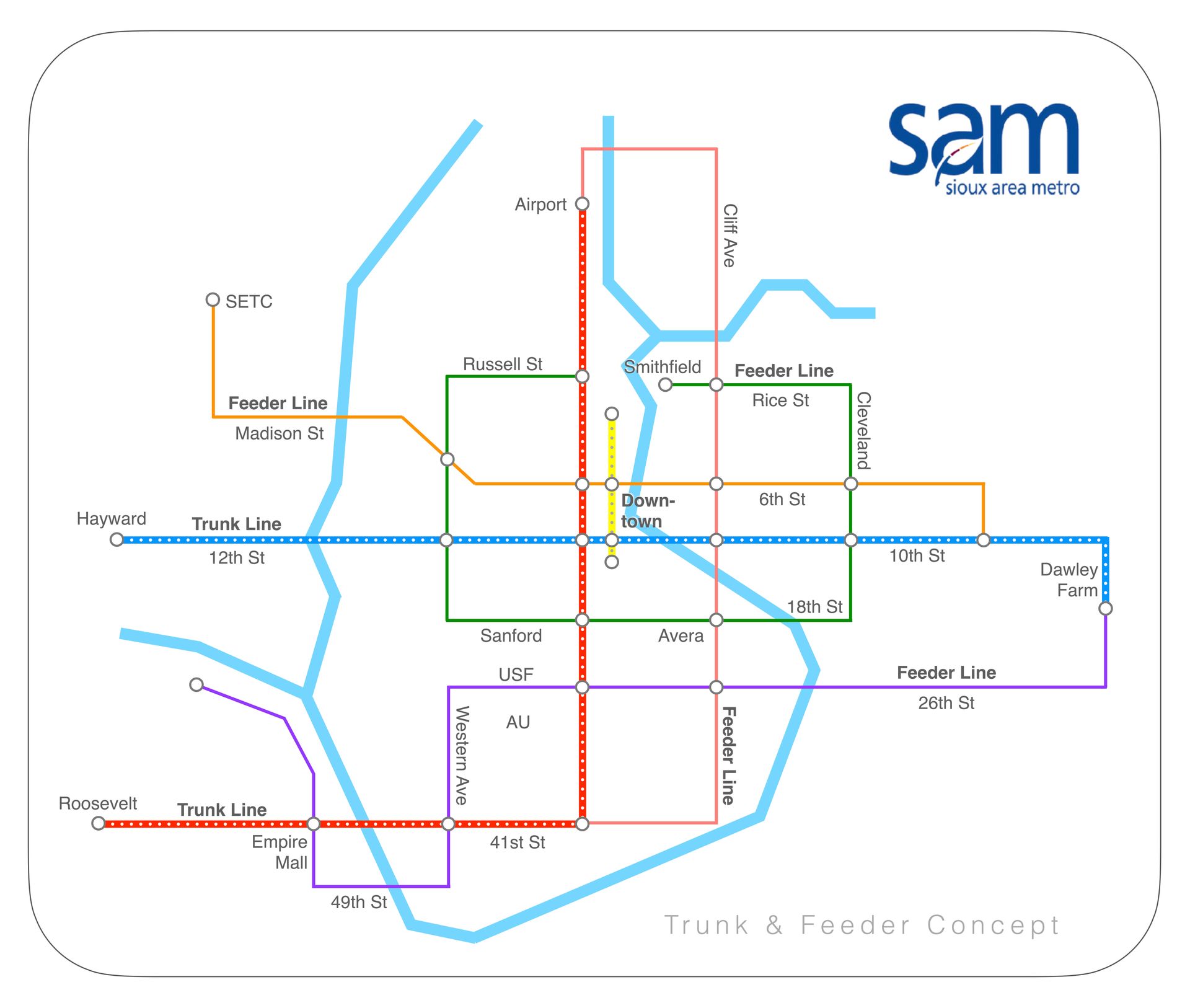
Bus routes should be designed around where people actually need to go. To be effective, service must be fast, frequent, and easy to understand. Aligning high-frequency trunk routes along well-traveled streets moves more people with fewer buses, reducing congestion for everyone. Feeder routes and SAM On Demand can serve surrounding neighborhoods and lower-density areas.
2. Make Routes Direct and Easy to Identify
Winding routes slow buses down and frustrate riders and drivers alike. Straighter, simpler routes improve reliability, reduce operating costs, and make the system easier to use. A clear, well-designed system map is essential so people know how to navigate the city by transit.
3. Make It Shine—Looks Matter
Clean, well-designed buses and shelters are essential. People judge public services quickly, and poorly maintained vehicles or stops drive potential riders away. Clean, well-kept transit sends a clear signal that the system is cared for and reliable. That attracts riders who have transportation choices and helps reduce traffic congestion over time.
4. Remove Friction and Improve Reliability
Quick boarding matters—for riders and for traffic. Many modern transit systems have improved on-time performance by adopting standardized payment systems and low-floor buses that make boarding faster and easier. Universal design features allow people with mobility limitations to board just as efficiently, reducing reliance on costly paratransit services.
Faster boarding means shorter stops, less disruption to traffic, and more reliable schedules—benefiting everyone on the road.
5. Use Data to Stay Accountable
Modern transit systems rely on real-time data to track performance, adjust service, and share accurate arrival times. Via has made good progress using data to improve SAM, and this approach should continue. Matching service to demand, improving reliability, and making cost-effective decisions all depend on measuring what works to make the most with taxpayer dollars.
Transit as Shared Infrastructure
Public transportation is shared infrastructure—just like streets and utilities. When it works well, everyone benefits. It reduces congestion, improves safety, supports local businesses, and helps Sioux Falls grow without driving up long-term costs.
You don’t have to ride the bus to benefit from it. You just have to value time, safety, and common-sense efficiency.
Sioux Falls deserves a mayor who will treat public transit as the critical piece of infrastructure it is—and who knows how to make Sioux Area Metro faster, more reliable, and more efficient for everyone.